Call NowCall
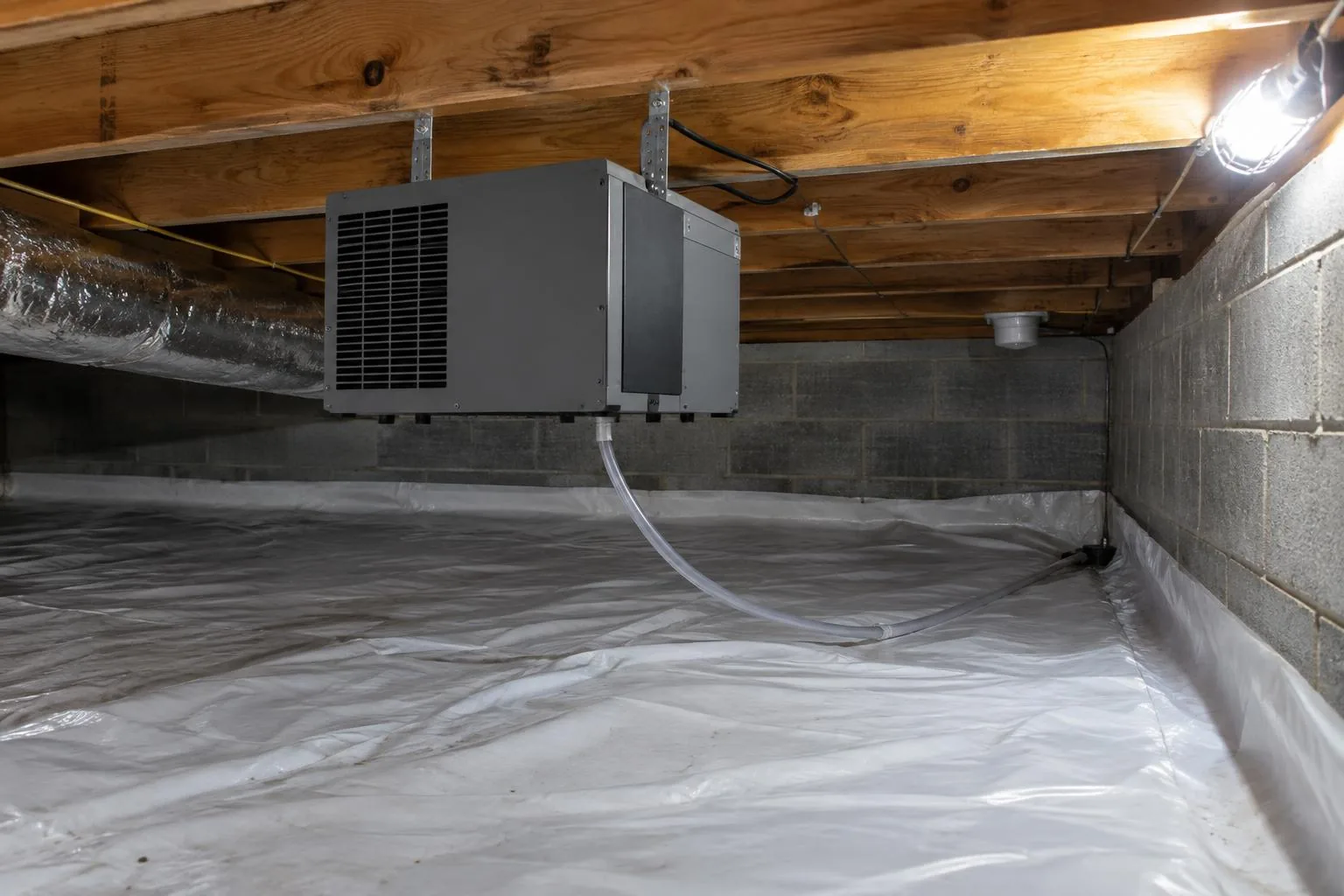
Dehumidifier hung from a joist in a sealed crawl space with a drain hose to the corner

Crawl Space Dehumidifier Installation Asheville NC: Crawl Space Dehumidifier and Dehumidifier For Crawl Space

Dependable Crawl Space Dehumidifier Installation in Asheville, NC and Buncombe County

  • Free quotes
  • Moisture source first
  • Permit handled

Foundation and Crawl Space Pros provides crawl space dehumidifier installation in Asheville, NC for homeowners in Buncombe County with damp, musty air under the house. A dehumidifier for crawl space use is sized to the volume of the space, drained by gravity or a pump and wired to its own outlet. The result is steady humidity control that keeps joists, subfloor and insulation dry through the summer.

Why homeowners choose us:

  • Free quotes for crawl spaces, basements and foundation walls
  • Moisture source first drainage and leaks fixed before any liner goes down
  • Permit handled closed crawl space conversions pulled under the NC code
  • Licensed and insured seven years in business, certificate on request

Our crew has seven years of local crawl space work and is licensed and insured in North Carolina. Quotes are free, and the unit, the drain line and any electrical work are priced separately. The dehumidifier goes in as the last step of a sealed space, so barrier and equipment work as one system. Wet floors call for crawl space waterproofing, and visible growth calls for mold removal. Our cost page shows typical ranges, and a sump pump can go in on the same visit.

Get a FREE Crawl Space Encapsulation Quote

No obligation. Free quote.

What Crawl Space Dehumidifier Installation Involves in Asheville, NC

Installing a dehumidifier takes more than setting a box on the ground, because the drain, the power and the sealing all decide whether it works. A typical Asheville job covers the pieces below, and your quote lists those your space needs:

  • Space measurement gives the volume of the crawl space, so the unit is sized to the air it has to treat.
  • Unit selection picks a dehumidifier installer’s model rated for cool, damp conditions, which is different from a household model.
  • Mounting position sets the unit off the ground, so it stays dry and the airflow reaches the whole space.
  • Condensate drain runs by gravity to a drain or the sump pit when the grade allows it, so water never collects.
  • Condensate pump lifts water out of the space when gravity cannot, and it needs a discharge line to the outside.
  • Dedicated outlet keeps the unit on its own circuit, so a tripped breaker elsewhere does not shut it off.
  • Humidistat setting holds humidity at a target, which is crawl space moisture control the homeowner can read.
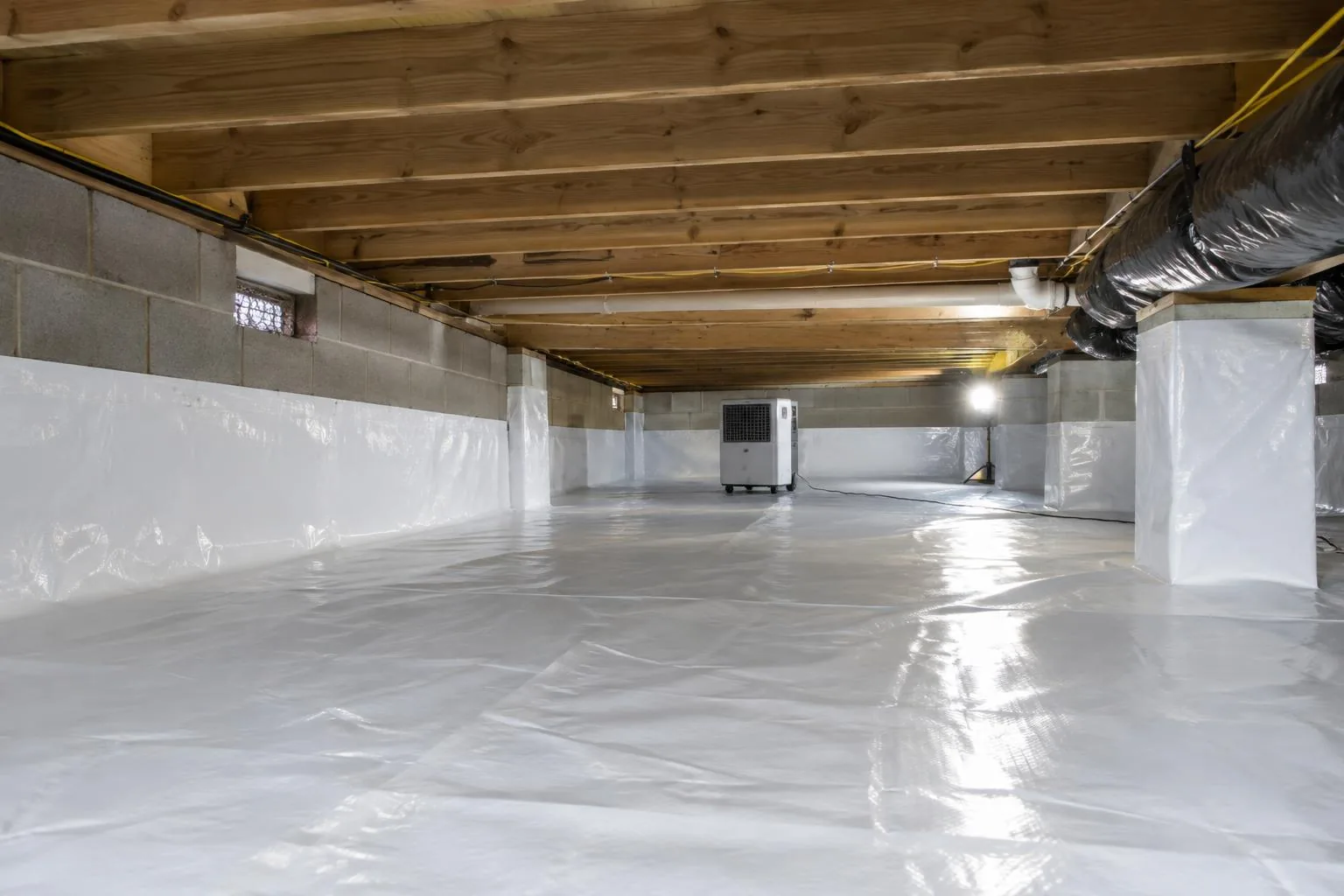
  • Sealing support includes the liner and vent closure from crawl space encapsulation, because open vents defeat a dehumidifier.
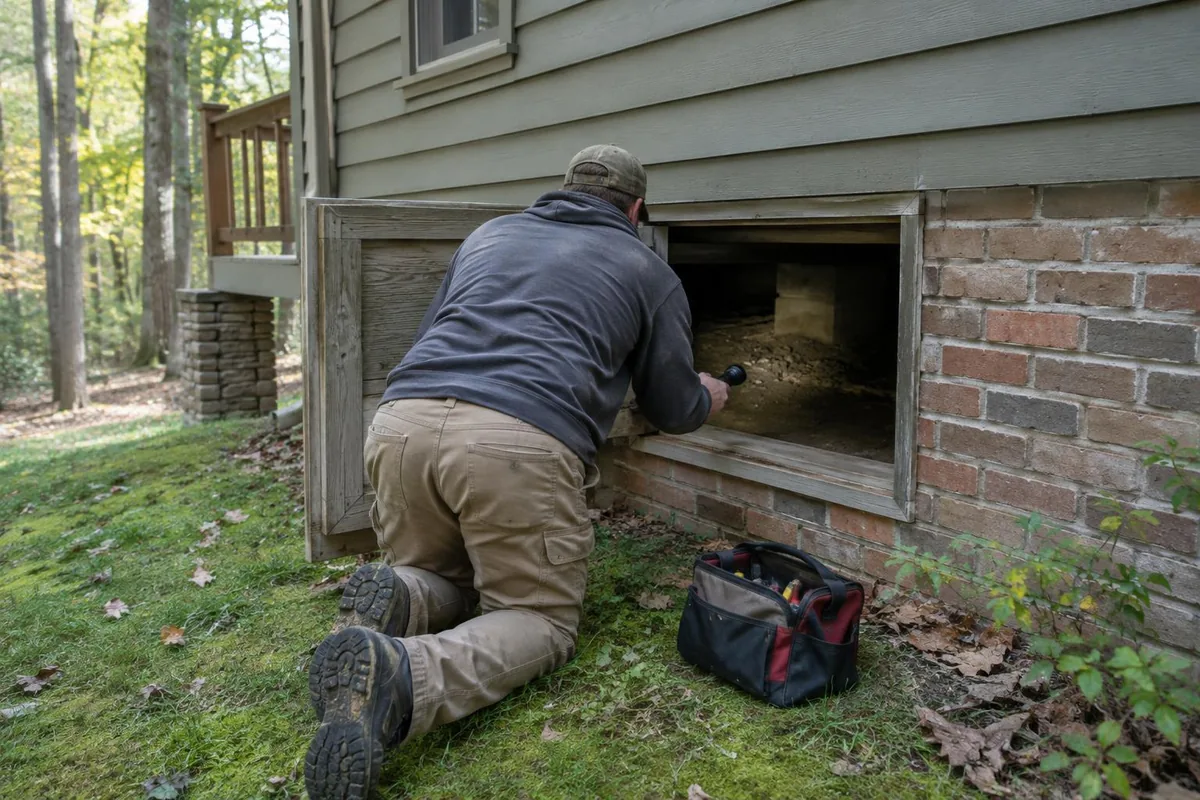
Contractor kneeling at an open crawl space access hatch in a brick foundation wall

Signs You Need a Crawl Space Dehumidifier in Asheville

Homeowners seldom ask for a dehumidifier by name. They describe a house that feels damp, and humidity under the house is often the source.

How Do You Know the Air Under the House Is Too Damp?

  • Musty smell indoors points to humid air rising from below, and mold follows when humidity stays high.
  • Condensation on ducts or pipes under the house shows warm air meeting cool metal, and it drips onto the floor and insulation.
  • Sagging insulation has absorbed moisture from the air, and the wood above it stays damp.
  • Humidity under the house that reads above comfortable levels on a cheap gauge shows the space cannot dry on its own.
  • A sealed crawl space with no drying fails code, since a closed space needs one drying method.

Why Crawl Space Dehumidifier Installation Is Harder in Asheville

Asheville humidity, rain and code requirements shape how a dehumidifier gets installed here. Four conditions drive the design of every system.

Humid Air From May Through September

Asheville averages about 75% relative humidity at 1 p.m. and 45.57 inches of rain a year. Warm, moist air moves into vented crawl spaces and condenses on cooler framing, so the dehumidifier is paired with vent closure and a liner. A unit placed in an open, vented space fights the whole outdoors and loses.

Heavier Rain Adds Moisture

Annual rainfall has risen 7.7 inches since 1970, and hourly rain is 14% more intense. Wet soil releases more vapor under the house, so a larger unit or a second unit may be needed in a damp space. Houses on hillside lots in Kenilworth and West Asheville often have wetter soil than flat lots, which raises the load on the unit.

Code Requires One Drying Method

Section R409.5 of the North Carolina residential code requires one drying method in a closed crawl space. A permanent dehumidifier with a condensate pump or drain and an outlet is the usual choice, so the installation is part of the permit. Inside Asheville city limits that permit goes through City Development Services, and we file it for you.

Units Left Unplugged Fail

Closed crawl spaces have failed where owners turned the equipment off to save power. We show you where the breaker is, how to read the humidistat and which noises are normal, so the unit keeps running. A system that nobody understands gets unplugged the first time it makes a noise, and the crawl space goes damp again.

How Much Does Crawl Space Dehumidifier Installation Cost in Asheville, NC?

A crawl space dehumidifier installed in Asheville typically costs $1,600 to $2,700. Unit capacity, the drain route, whether a condensate pump is needed and the electrical run to the unit move the price. A sealed space with a short gravity drain sits near the low end, and a large space needing a pump and a new circuit sits near the high end. The free quote lists the unit, the drain and the electrical work as separate lines.

Our Crawl Space Dehumidifier Installation Process in Asheville, NC

Five steps put a dehumidifier into service, and the install step shows how long the work takes.

1. Call and Describe the Dampness

You tell us what you notice, whether it is a smell, condensation or a humidity reading. We ask whether the crawl space has vents open or closed and whether a liner is already down, since both affect how the unit is sized and placed. Photos of the access door and the nearest outlet help us plan the drain route.

2. Measure and Free Quote

The estimator measures the crawl space, checks for water and plans the drain route and the outlet. You receive a free quote that prices the unit, the drain and the electrical work as separate lines, with the estimator explaining each choice and how the unit will drain. If the space has standing water or mold, the quote says so and the plan fixes that before any equipment goes in.

3. Mount and Plumb the Unit

The crew mounts the dehumidifier off the ground and runs the condensate line to a drain, the sump pit or a pump. A dehumidifier hookup usually takes 2 to 5 hours. Longer drain runs or new wiring add time, and the crew tests the drain before leaving. Water is poured into the line to confirm that it flows, and every fitting is checked for leaks while the unit runs.

4. Power and Setting

The unit is connected to its outlet, the humidistat is set and the crew runs the unit through a cycle to confirm it drains. Wiring is done to code, and any new circuit the job requires is installed by a qualified electrician. The crew labels the breaker so you can find it later, and we confirm the unit does not share a circuit with anything that trips often.

5. Walk-Through and Maintenance Plan

You get a walk-through of the unit, the drain and the breaker. We explain how to check the humidistat, how often to clean the filter and why the unit stays plugged in all year, because a closed crawl space gets damp again when the equipment is off. You also receive the model number and manual, so any future service call starts with the right information.

Crawl Space Dehumidifier Installation FAQs: Asheville, NC

How much does crawl space dehumidifier installation cost in Asheville?

A crawl space dehumidifier installed in Asheville typically runs $1,600 to $2,700. Unit capacity, the drain route and the electrical run change the price, and the free quote lists each part.

Does a sealed crawl space need a dehumidifier?

A closed crawl space needs one drying method under North Carolina code. A permanently installed dehumidifier with a drain or pump is the common choice, and a ducted air supply or exhaust fan can also qualify.

How long does dehumidifier installation take?

A hookup takes about 2 to 5 hours. New wiring, a long drain run or a pump installation add time, and the estimator tells you the schedule with the quote.

Can I use a regular household dehumidifier in my crawl space?

Household units are built for living areas and struggle in cool, damp spaces. A crawl space unit is sized to the volume of the space and drains on its own, so it keeps running without emptying a bucket.

Where does the water from the dehumidifier go?

Water runs by gravity to a drain or the sump pit, or a condensate pump lifts it out through a discharge line. We pick the route during the visit and test it before leaving.

Do I need a dehumidifier if the vents are open?

Open vents let humid air in faster than a dehumidifier can remove it. A dehumidifier works best in a sealed space, so we pair it with vent closure and a liner.

Do I need a permit for a crawl space dehumidifier?

A permit is required in North Carolina to convert a vented crawl space to a closed one, and the dehumidifier is the drying method. We file the permit as part of a full encapsulation.

Foundation and Crawl Space Pros serves Asheville and Buncombe County.

Get a Free Crawl Space Dehumidifier Installation Quote in Asheville, NC

Mon–Fri 7am–6pm · Sat 8am–2pm

Call Now Free Quote